
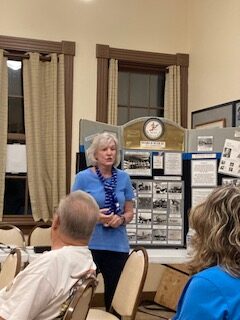
Diana Potter sharing about her mother’s WWII flying experience
The original Historical Society account, presented in the author’s own words.
A lot of people alive today know little or nothing about the careers of women pilots during World War II. Diana Potter, assisted by her husband Jeff, have made it a mission to change that. Diana’s mother, Beatrice “Bee” Falk Haydu, was a flying enthusiast before war broke out. So, when the word went out that the army was looking for female pilots, she was one of the more than 22,000 who applied & among the 1,074 who completed the rigorous training program and became a member of the Women Airforce Service Pilots (WASP).
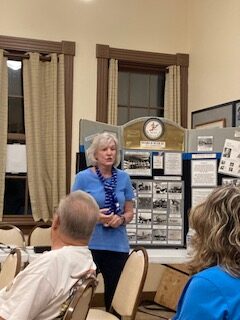
Using slides and a beautiful display board, Diana took those present through the training program to graduation and beyond. She discussed the number of support pilots necessary to keep one fighter pilot flying and the various jobs the women had to assist in this effort. The ladies were test pilots; they ferried planes from location to location; if a plane needed repair, it was the women pilots who flew them to make sure the work was properly done; and they even flew pulling targets while soldiers practiced shooting at the targets with live ammunition. That last one was a very dangerous assignment and fortunately not one that Miss Bee was given!
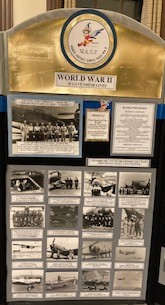
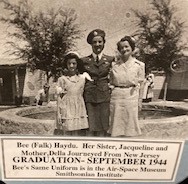
When the WASP program ended in 1944, the women received no military benefits and even had to find their own way home. It wasn’t until 1977 during the Carter administration, after much lobbing and hard work by dedicated former WASPs like Miss Bee, that they gained the recognition & benefits they deserved. More recently, President Obama signed a bill authorizing the Congressional Medal of Honor for WASP members. Bee stood beside the President as he signed that bill.
After the war Bee continued to work as a pilot initially ferrying Cessnas and eventually running an aircraft dealership with her husband (a former WASP instructor but not hers!) and starting a flight school. She was also a published author. One of her books is a collection of her wartime letters illustrated with over 100 pictures. A few copies of the book are available for sale at the Historic Village
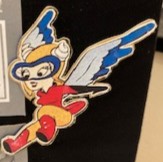
Images accompanying the article
Editor’s note (not part of the original article): The author’s text above is preserved verbatim. The medal referred to as the “Congressional Medal of Honor” is the Congressional Gold Medal. The visitor hours, prices, membership fees, and December 14 invitation are from the historical announcement and may no longer be current.